小王子第11章·爱慕虚荣的人
本章读“爱慕虚荣的人”。先听一遍,再用英文原文核对没有听清的一句话;中文译文可在篇末按需展开。
英文原文#
The second planet was inhabited by a conceited man.
“Ah! Ah! I am about to receive a visit from an admirer!” he exclaimed from afar, when he first saw the little prince coming.
For, to conceited men, all other men are admirers.
“Good morning,” said the little prince. “That is a queer hat you are wearing.”
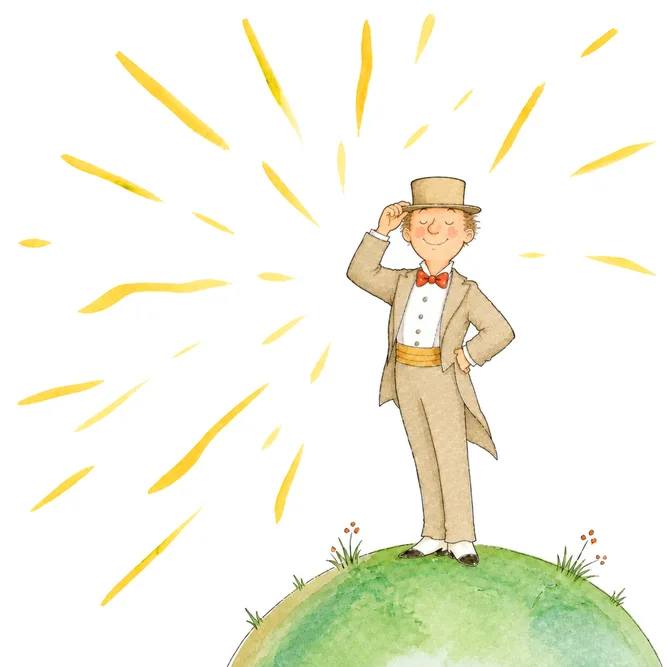
“It is a hat for salutes,” the conceited man replied. “It is to raise in salute when people acclaim me. Unfortunately, nobody at all ever passes this way.”
“Yes?” said the little prince, who did not understand what the conceited man was talking about.
“Clap your hands, one against the other,” the conceited man now directed him.
The little prince clapped his hands. The conceited man raised his hat in a modest salute.
“This is more entertaining than the visit to the king,” the little prince said to himself. And he began again to clap his hands, one against the other. The conceited man again raised his hat in salute.
After five minutes of this exercise the little prince grew tired of the game’s monotony.
“And what should one do to make the hat come down?” he asked.
But the conceited man did not hear him. Conceited people never hear anything but praise.
“Do you really admire me very much?” he demanded of the little prince.
“What does that mean—‘admire’?”
“To admire means that you regard me as the handsomest, the best-dressed, the richest, and the most intelligent man on this planet.”
“But you are the only man on your planet!”
“Do me this kindness. Admire me just the same.”
“I admire you,” said the little prince, shrugging his shoulders slightly, “but what is there in that to interest you so much?”
And the little prince went away.
“The grown-ups are certainly very odd,” he said to himself, as he continued on his journey.
中文对照#
展开本章中文译文
第二颗星球上住着一个自负的人。
他刚看见小王子走过来,就远远地叫道:“啊!啊!一位崇拜者要来拜访我了!”
因为在自负的人看来,其他人全是自己的崇拜者。
“早上好,”小王子说,“你这顶帽子真奇怪。”
“这是用来行礼的帽子,”自负的人回答,“别人为我喝彩时, 我就举起帽子向他们致意。可惜,从来没人经过这里。”
“是吗?”小王子说。他没听懂这个人在说什么。
“把两只手合在一起拍一拍。”自负的人指示他。
小王子拍了拍手。自负的人举起帽子,谦恭地行了个礼。
“这可比拜访国王有意思。”小王子心想。他又拍起手,自负的人就又举帽行礼。
这样玩了五分钟,小王子觉得这游戏太单调,开始厌倦了。
“那要怎样,你才会把帽子放下来呢?”他问。
可是,自负的人没听见。除了赞美,自负的人什么也听不进去。
“你真的很崇拜我吗?”他问小王子。
“‘崇拜’是什么意思?”
“崇拜,就是认为我是这颗星球上最英俊、穿得最好、最富有、最聪明的人。”
“可你的星球上只有你一个人啊!”
“帮个忙,照样崇拜我吧。”
“我崇拜你,”小王子轻轻耸了耸肩,“可这到底有什么,值得你这么在意呢?”
于是,小王子离开了。
他继续赶路,心想:“大人们确实很古怪。”
回到 小王子双语分章阅读30 选章,或在 小王子精读08·掌声、酒和星星6 跟读课堂选段。
对照课堂译本#
展开 Alan Wakeman 英译的第 11 章
On the second planet lived a swank:
‘Ah! Good! Here’s a fan coming to visit me!’ cried the swank as soon as he spotted the little prince approaching.
Because for swanks other people are all fans. ‘Hello,’ said the little prince. ‘What a funny hat you’re wearing.’
‘It’s for acknowledging applause, replied the swank. ‘I doff it when people clap. Unfortunately no one ever comes here.’
‘Is that so?’ said the little prince, wondering what he was talking about. ‘Clap your hands together,’ the swank advised him. The little prince clapped his hands together. The swank doffed his hat and bowed modestly.
‘This is more fun than visiting the king,’ the little prince thought to himself. And he clapped his hands together some more. The swank bowed and doffed his hat again.
After five minutes of exercise the little prince got bored with this game. ‘What do I have to do to make the hat fall off?’ he asked. But the swank didn’t hear. Swanks only ever hear praise. ‘Do you really admire me a lot?’ he asked the little prince. ‘What does “admire” mean?’ “‘Admire” means recognize that I am the handsomest, best-dressed, richest and most intelligent man on this planet…’
‘But you’re alone on your planet!’ ‘Admire me all the same! As a favour.’ ‘I admire you,’ said the little prince, shrugging his shoulders. But what could possibly interest him in that?
So he left. ‘Grown-ups really are very peculiar,’ he thought to himself during his journey.